St. Olympias, Widow, A.D. about 410.
by VP
Posted on Wednesday December 17, 2025 at 03:00AM in Saints

"This saint lived at Constantinople in the time of St. John Chrysostom. Her husband having been dead some time, the Emperor Theodosius proposed to her to marry Elpidius, his own near relation: to whom she answered, that God having taken away her husband, because she was not fit for the duties of the married state, she was resolved no more to engage in it. She was true to her resolution; and employed both her money and time in the relief of widows, orphans, and the sick. Her austerities were great, her habit mean, her humility edifying, her tears continual: and that nothing might be wanting to consummate her virtue, she was persecuted by the Emperor Arcadius, for espousing the cause of oppressed innocence in the person of her pastor, St. John Chrysostom. For this, being forced into banishment, she found her way by a happy death, to a better country which she had long desired.
Make use of this example as your state requires. There are difficulties in all conditions, and that of marriage cannot properly be Christian, without the self-denials of the cloister.
If humility and charity helped her to heaven, will not prodigality and
vanity shut you out from it? Take not your measures from the world, but from the gospel; and then say who has given you power so much to dispense with it. Follow the gospel, if you hope to come to the promises of the gospel. The saints all studied to husband every moment to the best advantage, knowing that life is very short, and that the night is coming on apace
when no man can work. Let no moments be spent merely to pass away time.
Diversions and corporal exercise ought to be used with moderation, only
as much as may seem requisite for bodily health and the vigour of the mind.
Every one is bound to apply himself to some serious employment. This,
and his necessary recreations, must be referred to God, sanctified by a
holy intention, and seasoned by humility, patience, prayer, and other
virtues. Thus will our lives be an uninterrupted sacrifice of divine praise and love." The Catholic Year by Fr. John Gother
St. Eusebius, Bishop and Martyr, A.D. 371.
by VP
Posted on Tuesday December 16, 2025 at 12:00AM in Saints
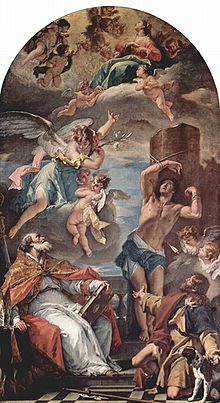
"He was a bishop: pray for all the bishops in God's Church. Who knows, but if the faithful constantly joined in presenting their most earnest petitions to Almighty God, as often as the festivals of holy prelates return throughout the year, He might bless the Church with a succession of holy pastors, who by word and example might be as so many lights to the faithful, to conduct them to a happy eternity?
St. Eusebius was bishop of Vercelli, and a powerful opponent of the Arian heresy, which at that time desolated the Church, under the protection of the Emperor Constantius By this emperor, he was sent into banishment for defending the Nicene Creed, and refusing to subscribe to the condemnation of St. Athanasius. The holy man suffered much in his exile from hunger, thirst, scourging, and various kinds of cruel treatment; but he had learned to undervalue his own life for the cause of Christ, and he cheerfully abandoned his body to his persecutors. Neither torments, nor enticements, could ever move him to consent to the enemies of his faith.
On the death of Constantius, he was permitted to return to his see, and came to Alexandria to concert measures with St. Athanasius for applying proper remedies to the evils of the Church. He afterwards travelled over the East, and through Illyricum, confirming in the faith those that were wavering, and bringing back many that were gone astray. St. Jerome places his death in 371; and he is styled a martyr, and honoured as such in the offices of the Church.
Pray for patience in all sufferings for yourself, and others who are under any trials. If you honour a martyr, suffer something this day with more than ordinary meekness. Consider how often you are in a passion, how easily you are disquieted, how inconsiderable a thing provokes you, how ordinary temptations overcome you. Are these the steps of a martyr? Is this according to the Gospel? Blush then, and be confounded at your weakness: pray for new strength, and beseech this holy martyr to pray for you." The Catholic Year by Fr. John Gother
- "Woe to us who have been born in this wretched age, an age - I say it weeping - in which anyone who has any zeal whatever for the glory of God, and casts his eyes on the men and women who now live, will be moved to tears to see everything turned upside down, the beautiful order of virtue overthrown, the bright light of life quenched, and scarce anything left in the Church but open iniquity and feigned sanctity. The light of good example is extinguished in those who ought to shine as luminaries to the whole world, like watch-towers and beacons on the mountains. No light, alas! comes from them, but horrid darkness, and pestilent mischief, by which innumerable souls are falling into destruction." -- St. John Fisher; Bishop of Rochester, Cardinal, Tower of London, 1535
- Prayer for Holy Bishops (Saint John Fisher): Lord, according to Your promise that the Gospel should be preached throughout the whole world, raise up men fit for such work. The Apostles were but soft and yielding clay till they were baked hard by the fire of the Holy Ghost. So, Good Lord, do now in like manner again with Thy Church Militant; change and make the soft and slippery earth into hard stones; set in Thy Church strong and mighty pillars, that may suffer and endure great labors, watching, poverty, thirst, hunger, cold and heat; which also shall not hear the threatenings of princes, persecution, neither death but always persuade and think with themselves to suffer with a good will, slanders, shame, and all kinds of torments, for the glory and laud of Thy Holy Name. By this manner, good Lord, the truth of Thy Gospel shall be preached throughout all the world. Therefore, merciful Lord, exercise Thy mercy, show it indeed upon Thy Church. Saint John Fisher (Sermon in 1508) from Saint John Fisher Forum
Saint Paul of Latros, Hermit 956 A.D.
by VP
Posted on Sunday December 14, 2025 at 11:00PM in Saints
TEMPTATIONS.-There are temptations which every one may avoid, and this is a positive duty; for "he who loves the danger shall perish therein," says the Holy Gospel. Some there are which no man can fly from, inasmuch as he bears them about him; neither the desert, nor the cloister, nor the solitary retreat shuts them out; fasting, prayer, and confidence in God are the only safeguards. St. Paul, the first hermit, St. Anthony, and St. Jerome, are cases in point. St. Paul, an anchorite of Bithynia, experienced temptations while on the arid rocks of Mount Latre, whither he had betaken himself. Although living merely on raw herbs, bitter acorns, and the water flowing near his grot, he had terrible conflicts to endure; but at length the spirit, or rather the power of grace, triumphed over the flesh. The outer world became aware of his virtues and admired him; he founded several retreats, or monasteries, for anchorites. Emperors, princes, pontiffs, and prelates sought the aid of his counsel and profited thereby, for holiness is a good counsellor. He died in 956.
MORAL REFLECTION.-"God is faithful, who will not suffer you to be tempted above that which you are able, but will make also with temptation issue, that you may be able to bear it."-(1 Cor. x. 13.). Source: Half-hour Pictorial Saints by Abbe Auguste Le Canu
"ST. PAUL, an anchorite of Bithynia, had betaken himself to Mount Latre in order to lead a life of greater seclusion and more perfect union with God. Here he gave himself to prayer and penance, subsisting solely upon roots, herbs, and nuts, and drinking only of the stream which flowed near his cave. But his Divine Master, seeing the generosity of His servant's soul, sent him many terrible temptations and trials in the midst of the solitude. Distrusting himself completely, and relying confidently on the power of God, St. Paul made use of the weapons of prayer, mortification, and continual vigilance, and by them triumphed over all the snares of the arch-enemy. After this severe conflict he became the founder of several monasteries. His counsel was sought by pontiffs and prelates; and even the highest princes of the age addressed themselves to him for advice. He died in 956."
My tears shall be my wine,
My bed a craggy rock;
My harmony the serpent's hiss,
The screeching owl my clock.
Source: Short Lives of the Saints By Eleanor Cecilia Donnelly
St. Lucy, Virgin and Martyr, A.D.304
by VP
Posted on Saturday December 13, 2025 at 03:00AM in Saints

"She was a holy virgin. Pray for all who live in the profession of that state. She obtained leave of her mother to sell what was settled for her portion, and gave it to the poor. Pray for all that are under the temptations of their youthful age; when vanity, self-love, curiosity, prodigality, levity, and the immoderate desire of being admired and esteemed, press with greatest violence upon them, and the solicitude of pleasing themselves diminishes the compassion due to their neighbours. Pray for remedy against all the indiscretions and follies of that unsettled age; that they may ever remember that they are but dust and clay; that they are made for another world, and not for this; that a little given to the poor, is much more to the purpose than all they lay out upon themselves; while all this expense is only to court the world, which ought to be forsaken, and the other is to purchase everlasting rest.
St. Lucy, being accused for believing in Christ, and commanded to be carried to a place of infamy, God was pleased to deliver her, by rendering her immoveable, so that all the strength of man and beasts was unable to remove her from the place where she stood. Have you not reason to beg of God to manifest his power in you, that you may be more firm and immoveable than you generally are? Consider how easily you are prevailed upon to forsake your duty and good purposes. How little is sufficient to draw you off from your prayers, and to make you transgress the rules of order, temperance, and good discipline? As much then as you want of Christian steadiness, pray for this day; and see that the fervour of your prayers be proportioned to your wants.
Thus by the divine assistance, St. Lucy withstood all the attempts of her enemies, outlived the flames with which they had encompassed her, and at length finished her martyrdom by the sword. Examine your daily practice, and see how little of your inclinations you are willing to leave for God: How then will you give your life? How will you stand against torments, when petty flatteries make you yield, and you cannot yet bear an ordinary self-denial, or contradicted passion. Pray, then, and practise something this day: try if St. Lucy's flames will give you any courage." The Catholic Year; Or Daily Lessons on the Feasts of the Church by Rev. Fr. John GOTHER
PRAYER TO ST. LUCY: We admire, O glorious virgin and martyr, St. Lucy, that light of lively faith which it pleased the most merciful God to infuse into thy beautiful soul; enlightened by which thou didst despise the vain and trifling things of this miserable earth, keeping thine eyes fixed upon that heaven for which alone we have been created. The riches and the pleasures which the seductive world held out to thee, to the prejudice of faith and of divine grace, never clouded thy mind, nor allured thy heart. Hence, far from consenting to the proposals of thy wicked persecutor, thou didst show thyself bold and resolute to encounter even death itself, rather than be unfaithful to thy heavenly Lord. What cause of confusion for us, who, not less enlightened by faith and strengthened by grace, still do not know how to resist our guilty passions, nor to despise the evil maxims or repel the flattery of the infernal enemy. Ah! obtain for us, dear saint, from God greater light, by which we may come to know that we were not made for things here below, but for those of heaven.
V. Pray for us, St. Lucy.
R. That we may be made worthy of the promises of Christ.
Let us pray: Hear us, O God of salvation, that, as we rejoice in the heroic constancy of blessed Lucy, Thy virgin and martyr, so we may be filled with the spirit of devotedness to duty and of fidelity in Thy services.
The Catholic Girl's Guide: Counsels and Devotions for Girls in the Ordinary walks of life edited by Francis Xavier Lasance
St. Damasus, Pope and Confessor A.D. 384
by VP
Posted on Thursday December 11, 2025 at 03:00AM in Saints

"He served in the Church of St. Laurence at Rome, and always lived in a perfect state of continence. On the death of Pope Liberius in 366, St. Damasus was chosen bishop of Rome. When St. Jerome went to Rome, the holy pope detained him near his person, till his own death, three years after, employing him as his secretary, and to answer consultations. St Jerome calls him an excellent man, an incomparable person, learned in the Scriptures, a virgin doctor of the virgin Church, who loved chastity, and heard its praises with pleasure. Theodoret says, that he was illustrious by his holy life, and ready to preach, and to do all things in defence of the apostolic doctrine. The ancients particularly commend his constancy in maintaining the purity of our holy faith, the innocence of his manners, his Christian humility, his compassion for the poor, his piety in adorning holy places, especially the tombs of the martyrs, and his singular learning. Having sat eighteen years and two months, he died on the 10th of December, in 384, being near fourscore years of age.
Pray for the present pope, that, like this, his holy predecessor, he may be eminent in all virtue, and the careful discharge of all duties which belong to his state. Pray for the reformation of all those errors, by which the doctrine of the Gospel is at this day corrupted. It is in your power to help your neighbour to the truth by your example. See whether you have not, by your disorders, given scandal to many, and made the enemies of God blaspheme. What satisfaction can you now make, but by the exemplarity of a regular and well disciplined life? Pray this day for all who have taken a dislike to the truth from your scandalous life, or have been drawn into sin by your example or authority, that you may make some amends for the injury done to them." Source: The Catholic Year; Or Daily Lessons on the Feasts of the Church by Rev. Fr. John Gother
St. Melchiades the African, Pope And Martyr, A.D. 314 (32nd pope)
by VP
Posted on Wednesday December 10, 2025 at 03:00AM in Saints

"He was bishop of Rome in the time of Maximian: he suffered great persecution from him, and though he outlived the emperor, and died when peace was restored to the Church, yet he is numbered among the martyrs. Pray for all under any sort of persecution, that God would give them the spirit of patience, constancy, and meekness." The Catholic Year by Fr. John Gother
"ST. MELCHIADES, POPE AND MARTYR THE Church makes a commemoration, on this same day within the octave, of the holy Pope Melchiades. This illustrious Pontiff, whom St. Augustine calls 'the true child of the peace of Jesus Christ, the worthy father of the Christian people,' ascended the papal throne in the year 311, that is, during the very fiercest storm of persecution. It is on this account that he is honoured with the title of martyr. Though he did not shed his blood for the name of Jesus, yet he shared in the glory of the martyrs, by reason of the great trials he had to suffer during the persecution, which afflicted the entire Church. It was the same with many of his predecessors. But the pontificate of Melchiades marks a very important period of the Church the transition from persecution to peace. As early as the year 312, liberty was granted to the Christian religion by Constantine. So that Melchiades had the glory of governing the Church at the commencement of her period of temporal prosperity. His name now graces the calendar of the liturgical year, and reminds us of that peace which will soon descend upon us from heaven.
Prayer: Deign then, O father of the Christian people, to
pray for us to the Prince of peace, that, in His approaching visit, He
may quell our troubles, remove the obstacles to His grace, and reign as
absolute Master over our heart, our mind, and our senses. Pray also that
peace may reign in the holy city and Church of Rome, of which thou wast
the Bishop, and which will honour thy venerable memory to the end of time: help her by thy intercession now that
thou art face to face with God, and hear the prayers which she addresses
to thee." The Liturgical Year by Dom Gueranger
St. Theodorus of Amasea, Martyr A.D. 306
by VP
Posted on Tuesday December 09, 2025 at 03:00AM in Saints

RESOLUTION AND STEADFASTNESS. Theodorus, who had been recently enrolled in the army, was stationed with his legion at Amasius, when the edicts of persecution were published by Galerian and Maximian. "As for me, I am a Christian!" exclaimed the youthful warrior, " and will not sacrifice to the gods." Although not bruiting abroad his faith ostentatiously, he did not shrink from avowing it. "I know nothing of your gods," he said to the magistrates; "I am a Christian; do with me what you like!" They released him, that he might have time for reflection; but, as soon as he was at liberty, he snatched up a torch and proceeded to set the temple of Cybele on fire. "The temple was of wood," he exclaimed, with a smile, "and the deity was of stone; the one is reduced to ashes and the other to lime. Is the misfortune, then, very great?" In the midst of the most horrible tortures, Theodorus displayed the most inflexible courage; while the iron was rending his flesh, he calmly chanted some verses of the Psalms. At last the judge, utterly subdued and at a loss for further expedients of cruelty, sentenced him to the stake, on the 17th of February, in the year 306.
MORAL REFLECTION. "Let him that asketh in faith waver not, for let not that man think he shall receive anything of the Lord." (Jas. i. 6.)
Source: Pictorial Half Hour with the Saints by Abbe Auguste Lecanu
St. Leocadia, A.D. 304
by VP
Posted on Tuesday December 09, 2025 at 03:00AM in Saints

Mariano Salvador Maella: Saint Leocadia before the Praetor
DOCILITY OF VIRTUE.-The practice of the highest virtues is really difficult to those only who are animated with the worldly spirit. Any one who is trained to well-doing accomplishes it without effort, but the transition from evil to good is more arduous, because the habits already contracted, and the sentiments long cherished, oppose a formidable barrier. Leocadia was living at Toledo in the practice of all Christian virtues, and had grown accustomed thereto from her childhood. Far from aspiring after the advantages and prospects of the world, she only longed for martyrdom; her soul was inflamed with ardour in reading the lives of the saints, and she piously envied above all the combats and goodly reward which fell to St. Eulalia. God lent a favourable ear to her yearnings; she was brought before the governor Dacian during the course of Diocletian's persecution, cast into chains, tortured with horrible atrocity, and finally thrown into prison, where she expired from her sufferings. Thus does death itself become sweet to any one that knows how to desire it aright.
MORAL REFLECTION.- "By thy commandments I have had
understanding; how sweet are thy words to my palate! more than honey to
my mouth."-(Psa. cxix. 103.) Pictorial Half Hours with the Saints by Fr. Auguste Lecanu
St. Ambrose, Bishop, Confessor, Doctor of the Church, A.D. 397
by VP
Posted on Sunday December 07, 2025 at 03:00AM in Saints

St. Ambrose by Gerard Seghers (1591–1651)
"ST. AMBROSE was the most admirable model of invincible courage and constancy in resisting evil, and discharging his duty, since the days of the apostles. His father was a supreme magistrate of the empire; and the saint's birth happened about the year 340. Whilst he was a child, and lay asleep in one of the courts of his father's palace, a swarm of bees flew about his cradle, and some of them crept in and out of his mouth, and at last they mounted up into the air quite out of sight. This was looked upon as a presage of his future greatness and eloquence.
He was chosen bishop of Milan by a particular direction of heaven. Having undertaken the pastoral charge, he was a zealous promoter of church discipline; opposing errors and punishing vice, never letting the dignity of the offenders, or the fear of offending great ones, deter him from the just censure of the offence. Thus he refused admittance into the church to the Emperor Theodosius, because he had commanded a cruel massacre of seven thousand people at Thessalonica and when the emperor attempted some excuse, by saying that David had sinned, the holy bishop firmly replied: "Then as you have followed him in sinning, follow him also in repenting." Theodosius submitted, accepted the penance enjoined him, and passed eight months in his palace in mourning and penance. After this he went to the church, but St. Ambrose still forbade him to enter it, and ordered him to place himself among the public penitents at the church door. There he knelt and lay long prostrate in the rank of the penitents, lamenting his sin, and begging pardon of God; until St. Ambrose, satisfied that he was truly penitent, gave him absolution. It was by the piety and zeal of St. Ambrose, that St. Augustin was reclaimed from his errors and sinful life.
Pray that all prelates and pastors may possess the spirit of St. Ambrose, so as to be above all flattery, fear, and human respect. Pray for all who are engaged in errors and sins; and beg the charity of this saint to join with you for obtaining grace for them." The Catholic Year; Or Daily Lessons on the Feasts of the Church by Rev. Fr. John GOTHER
Prayer of St. Ambrose: JESUS CHRIST, our High Priest and Pontiff, who hast offered thyself on the altar of the cross, a pure and unspotted host for us poor sinners, who hast given us thy flesh to eat and thy blood to drink, I beseech thee, by that blood, the great price of our salvation; I beseech thee, by that unspeakable charity which prompted thee to shed it for us; that thou wouldst teach me how to be present at this great mystery, how to behave with that reverence and honour, and to feel that fear and devotion, which is becoming so great an occasion. Make me, in thy mercy, ever believe and understand, think and speak, of this awful mystery, in a manner which may be pleasing to thee, and good for mine own soul.
Let thy good Spirit enter within my breast, and breathe into it, silently and sweetly, every truth which learned words might more slowly convey. For thy mysteries are profound indeed, and concealed beneath a sacred veil.
Permit me, O God, in thy great clemency, to go through this duty with a clear heart and a pure mind. Free my heart from all impure, vain, and hurtful thoughts. Strengthen me through the strong and faithful guardianship of thy blessed angels, that the enemies of my soul may be put to flight. May the virtue of this great mystery, and the power of thy holy angels, remove from me, and from all thy servants, the spirit of pride and indifference, of envy and blasphemy, of fornication and uncleanness, of doubt and hesitation. May those be confounded who persecute us: may those evil passions which war against our souls be destroyed.
O King of virgins and lover of chastity, may the dew of thy heavenly blessing quench within me every impure flame; so that unspotted chastity may alone find place in my body and soul. Mortify within me every disordered passion, every dangerous sensation; and, amid all thy other favours, give me that true and perpetual chastity which is pleasing to thee. For with what sorrow and tears, with what fear and reverence, with what chastity of body and purity of soul, ought we not ever to approach this divine and heavenly sacrifice, where thy flesh is truly eaten, where thy blood is truly drunk? where the lowest and the highest, where earth and heaven, are joined? where the holy angels are present? and where, in a wonderful and unspeakable manner, thou art both priest and sacrifice? Who could worthily join in this celebration, unless thou, God omnipotent, didst make him worthy? I know, O Lord, I know and I confess that I am not worthy to approach this great mystery, on account of my many sins and my endless negligences: but I know also, and I firmly believe and stedfastly confess, that thou, my God, canst make me worthy; that thou alone canst change impurity into cleanliness, and sin into justice and sanctity. By this thine omnipotence, I pray thee to enable me, a poor sinner, to partake of this sacrament with fear and trembling, with purity of heart, with tears of sorrow, with spiritual cheerfulness, with heavenly joy. Let my mind feel the sweetness of thy blessed presence, and of the company of thy holy angels around me.
For, O Lord, although a sinner, yet I approach to thy holy altar mindful of thy revered passion, that I may offer to thee the sacrifice which thou hast instituted, and which thou hast directed to be offered for our salvation in remembrance of thee. Receive it, I beseech thee, great God, for thy holy church, and for the people which thou hast purchased with thy blood. I offer to thee, O Lord, the sorrows of this thy people, the danger of nations, the groans of captives, the wants of orphans, the distresses of the weak, the failings of the old, the despair of the dying, the sighs of youth, the vows of virgins, the tears of widows. Lighten, I beseech thee, lighten and assuage the sufferings of all.
Yes; do thou, O Lord, have mercy on us all, and despise not that which thou hast created. Remember what our substance is : that thou art our Father: that thou art our God. Be not angry with us, and withhold not the multitude of thy mercies from us. For we do not come before thee to justify ourselves, but to pray for thy pardon and pity. Take away from us these hearts of stone, and give us feeling hearts, which may seek thee, which may love thee, which may tend towards thee and enjoy thee. Look down, O Lord, with a propitious and serene countenance, upon the wants of thy servants; and grant that no prayer may be offered up to thee in vain, that no hope may remain unfulfilled; and do thou thyself, O God, suggest to us those prayers which thou wilt most kindly hear and most freely grant.
We pray to thee, also, O holy Lord and Father, for the souls of the faithful departed; that this great sacrament of love may obtain for them health, salvation, refreshment, and joy. O Lord, my God, let them feel the effects of this great offering of thee, the living bread which came down from heaven and givest life to the world,-of thee, the Lamb of God, who takest away the sins of the world; let them be refreshed and consoled by it; and may its merits avail to bring them to the joy and glory of thy heavenly kingdom. the fulness of thy blessing, the holiness of thy Divinity, let the invisible and incomprehensible majesty of thy Holy Spirit, descend upon these our offerings; and enable me also to approach this sacrifice with purity, with devotion, with tears, and with reverence, so that even my prayers may conduce to render it available to the salvation of all, whether living or dead.
I beseech thee also, O Lord, by the most holy mystery of thy body and blood, by which, in thy church, we are daily fed, and cleansed, and sanctified, and made partakers of thy great Divinity-I beseech thee to fill me with such virtuous dispositions that I may approach with a good conscience to thine altar, and find safety and life in this heavenly sacrament. For thou hast said, "The bread which I will give is my flesh for the life of the world; "I am the living bread which came down from heaven; "If any one eateth of this bread, he shall live for ever.' O blessed bread, heal the affections of my heart, that I may feel the sweetness of thy love! O bread from heaven, containing all delights, strengthen my heart that it may never fall away from thee, but may ever feel the effects of thy presence! Thou art the bread of angels, and the bread of poor pilgrims, whom thou refreshest with so excellent a viaticum, lest they faint by the way. O holy bread, O living bread, O pure bread, which came down from heaven and givest life to the world, come into my heart, and purify me from every evil inclination of body and soul. Come into my heart, and strengthen me and purify me, internally and externally. Be my shield and the salvation of my soul and body. Drive from me every wily foe; let them fly from the presence of thy power; so that, being fortified by thee both within and without, may advance, by a straight path, to thy heavenly kingdom, where I may no longer see thee beneath veils and mysteries, but where my thirst may be for ever satisfied, and where I may for ever enjoy thee, who, with God the Father, in the unity of the Holy Ghost, livest and reignest for ever. Amen. The Treasury of Prayer by ST. Vincent de Paul 1853
St. Nicholas, Bishop and Confessor, A.D. 342.
by VP
Posted on Saturday December 06, 2025 at 03:00AM in Saints
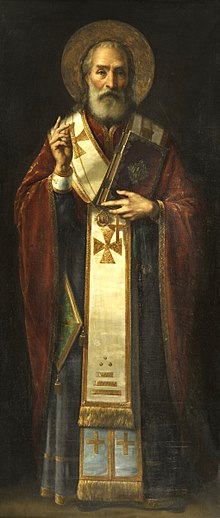
Čeština: Jaroslav Čermák (1831 - 1878) - Sv. Mikuláš
ST. NICHOLAS was a child of prayer, being obtained of God, like Samuel, as the reward of his parents' virtue. A good lesson for parents to recommend their children daily to God, through whose blessing alone they can be secured against the corruption of the world, and the many dangers of sin.
His life was the practice of abstinence, mortification, and extraordinary charity in relieving the distressed. Follow his example, as far as your circumstances permit. Pray against all immoderate love of yourself, and seeking your own ease: and begin to fear that a sensual method of indulging and pleasing yourself will not lead you to that crown, which our forefathers gained only by self-denials.
St. Nicholas was chosen by a particular direction of heaven, archbishop of Myra, a city of Lycia in Asia. In that charge, he was a light shining to men, in all piety, liberality, hospitality, and the care of his flock. Pray that all who are raised to that dignity may be prepared by his virtues, and may be the choice of heaven. Pray for all bishops now in God's Church, and in particular for that Prelate, to whose flock you belong, that they may be every way faithful to their charge, and that their zeal and charity may be answerable to their dignity.
St. Nicholas died at Myra in the year 342, and was buried in his own cathedral. This saint is esteemed the patron of children, because he was from his infancy a model of innocence and virtue; and to form that tender age to piety was always his first care and delight. To impress on the minds of children perfect sentiments of devotion, religion, and virtue, is of the utmost importance. But instruction must be enforced by example. Precepts and exhortations lose their force, when contradicted by bad example. Pray that all parents and instructors may do as well as teach, and that children may be docile and virtuous." The Catholic Year; Or Daily Lessons on the Feasts of the Church by Rev. Fr. John Gother
Prayer to St. Nicholas: O God , who by innumerable miracles hast honored blessed Nicholas , the bishop grant , we beseech thee , that , by his merits and prayers , we may be delivered from the flames of hell . Through our Lord Jesus Christ... (1 Pater, 1 Ave) The Glories of Jesus with Prayers at Mass by Rev. Fr. Vincent HUBY, SJ 1835
